
Central Asia faces growing challenges from climate change, glacier melt, and water scarcity, which increasingly affect communities and economies across the region. To respond effectively, scientists and policymakers are coming together to build a shared vision for how the region can adapt to a changing climate and manage its precious water resources sustainably.
The Blue Peace Central Asia (BPCA) Initiative, funded by the Swiss Agency for Development and Cooperation (SDC) and implemented by the International Water Management Institute (IWMI) in partnership with the International Union for Conservation of Nature (IUCN) and the Regional Environmental Centre for Central Asia (CAREC), is playing a leading role in uniting researchers, policymakers, and institutions. Through dialogue and joint action, BPCA is helping to build a strong scientific foundation for sustainable and peaceful water governance in the region.
Regional Scientific Consultations: A Collaborative Milestone
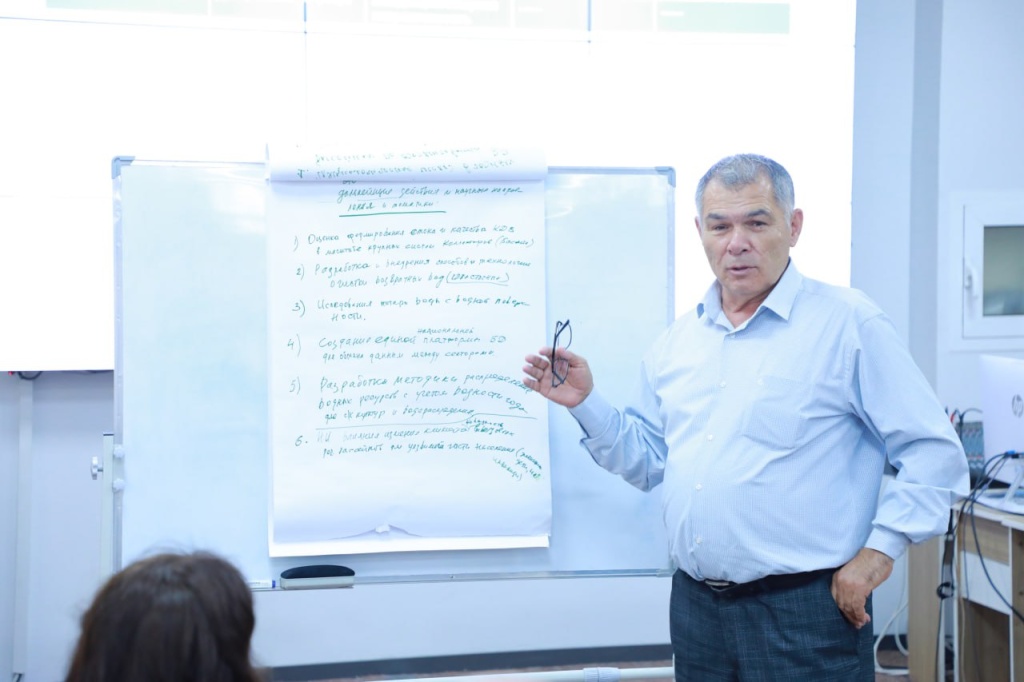
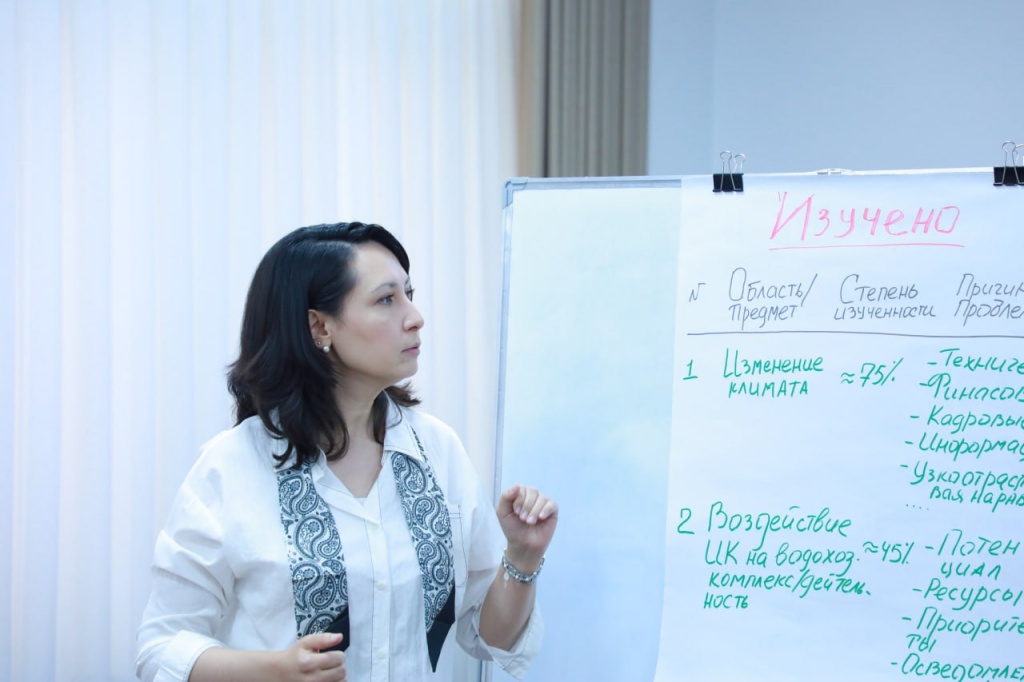
Between July and October 2025, IWMI convened a series of national scientific consultations in Kazakhstan, Kyrgyzstan, Tajikistan, Turkmenistan, and Uzbekistan under the framework of BPCA. The meetings were hosted by leading academic and research institutions, including the Tashkent Institute of Irrigation and Agricultural Mechanization Engineers, Kazakh National University named after Al-Farabi, Institute of Water Problems, Hydropower and Ecology of the National Academy of Sciences of Tajikistan, Diplomatic Academy of the Ministry of Foreign Affairs of the Kyrgyz Republic, and the State Committee on Water Management of Turkmenistan.
The consultations form part of BPCA’s ongoing efforts to bridge science and policy through hydro diplomacy, fostering evidence-based decision-making for sustainable water governance in Central Asia. These scientific dialogues complement BPCA’s broader efforts under its three pillars: Hydro Diplomacy, Small Transboundary Tributaries, and Capacity Building - to promote equitable and climate-resilient water cooperation across Central Asia.
National consultations gathered around 70 experts from universities, research centers, and international organizations. Participants discussed how to align national scientific priorities with regional needs, strengthen collaboration, and develop innovative approaches to water and climate adaptation.
Discussions during the consultations highlighted the growing importance of connecting science with policy and fostering partnerships across borders. Scientists examined national experiences in addressing climate and water challenges and emphasized the need to fill existing research gaps through collective efforts.
The consultations also explored opportunities for launching joint scientific initiatives and creating mechanisms to share knowledge and data regionally. “These meetings are more than scientific discussions, they are steps toward building trust and understanding,” said Iskandar Abdullayev, Senior Researcher at IWMI. "When scientists from across Central Asia come together, they not only share data and research but also bridge perspectives shaped by different experiences and realities. This dialogue helps us move from isolated national studies to a collective regional vision - one that turns knowledge into action and transforms science into a tool for peace and cooperation”.

Next Steps: Toward a Regional Climate Strategy
The consultations laid the groundwork for defining a common research agenda on water and climate adaptation in Central Asia. This agenda will serve as a roadmap for future collaboration, guiding joint studies and policy recommendations that reflect the region’s shared priorities.
Another key outcome is the launch of the Community of Practice on Water and Climate Change Adaptation (CoP-WCCA). This network will connect researchers, institutions, and policymakers across borders, fostering continuous dialogue and knowledge exchange.
Participants also began developing joint scientific products and innovative concepts to be integrated into the Regional Climate Change Adaptation Strategy. These contributions are expected to be showcased at the Regional Environmental Summit 2026 (RES-2026), where Central Asian countries will present unified strategies for climate resilience and sustainable development.