
The International Water Management Institute (IWMI), in partnership with the Blue Peace Central Asia (BPCA) initiative funded by the Swiss Agency for Development and Cooperation (SDC), and with the support of the Ministry of Water Resources of the Republic of Uzbekistan, held a national workshop dedicated to discussing the Roadmap for BPCA 2 Pillar: Benefit Sharing at the Basin Level
The purpose of the workshop was to strengthen transboundary cooperation in sustainable water management, identify criteria for selecting small transboundary rivers, and develop a national roadmap for conducting joint field missions and introducing climate-resilient management mechanisms. The event brought together representatives of the Ministry of Water Resources of Uzbekistan, research institutes, universities, civil society organizations, as well as international partners, including SDC, IUCN, and CAREC.
In Central Asia, most water resources are formed across several countries, making them inherently transboundary. Effective management of these shared waters requires close cooperation, coordinated approaches, and harmonized water policies. The benefit-sharing project is aimed precisely at advancing this kind of cooperation.
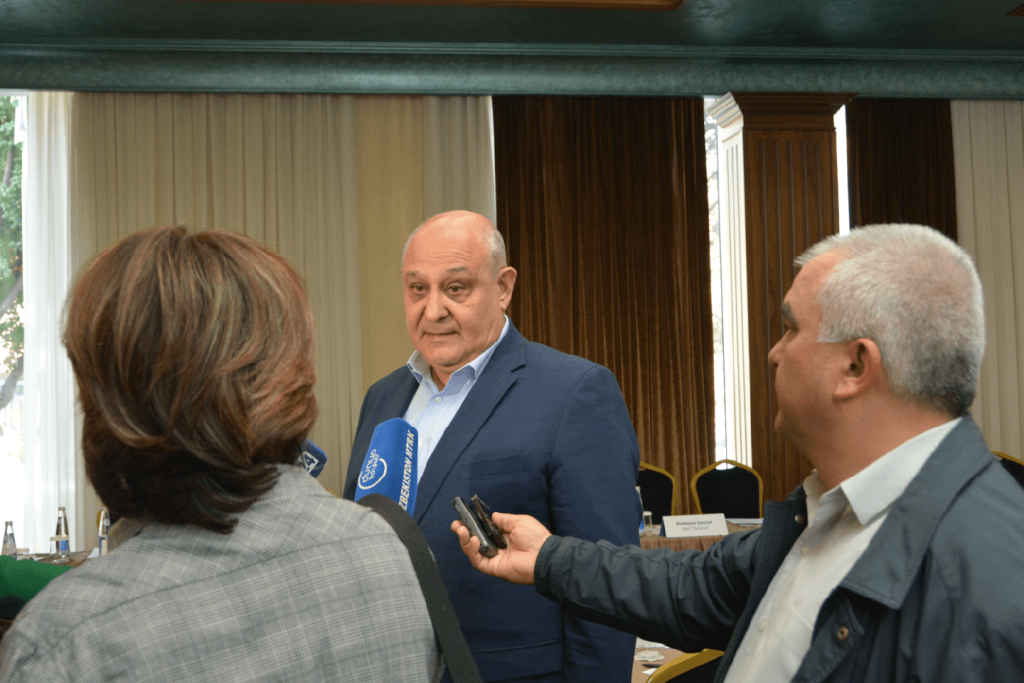
Iskandar Abdullaev, Senior Researcher at IWMI, emphasized the broader value of the initiative: “From this perspective, the project is designed to maintain and strengthen dialogue between our countries. It provides technical and institutional support, capacity building, and pilot projects in transboundary basins. The uniqueness of this project lies in the fact that it builds on previous experience of cooperation among Central Asian countries, while also introducing new elements such as joint financing of interstate water facilities, the creation of shared management systems for these water resources, and the development of new agreements on water use in the region.”
According to IWMI, Central Asian countries have already created a strong foundation of political trust, with presidents meeting annually and consistently addressing environmental and water-related issues. This creates significant opportunities for cooperation in trade, logistics and other areas that can reduce pressure on scarce water resources. However, water-related contradictions are not yet fully resolved, particularly regarding allocation volumes, water-use regimes, and tariffs.
.png "19 11 (1).png")
Ashanti Bleich, Regional Specialist on Water Resources, Infrastructure and Climate Change at SDC, highlighted Switzerland’s longstanding support in fostering trust and cooperation in Central Asia:
“Switzerland has a longstanding presence in Uzbekistan and other countries of the region, supporting their national priorities. Thanks to its neutrality and reputation as a reliable partner, Switzerland helps build trust and cooperation. Through the Blue Peace Central Asia initiative, Switzerland supports dialogue among countries, especially joint management of transboundary water resources.”
She noted that Switzerland’s contribution is not limited to financing, but includes the development of hydro-diplomacy, creation of expert platforms, application of technical solutions and investments in education, master’s programs and initiatives aimed at empowering women.
.png "19 11 (2).png")
BPCA Project Manager, Alexandr Nikolayenko, described the practical activities being implemented under the program:
“All five countries are working within this project, and one of the most important components is the implementation of pilot projects in small transboundary river basins. Our main task is to support countries in addressing existing challenges in interstate and water management cooperation, and to help identify joint projects that demonstrate the possibility of sharing benefits—not only water itself, but also economic and financial benefits.”
Blue Peace Central Asia’s work at the basin level focuses on supporting existing decision-making structures and helping mobilize joint financing mechanisms, including public-private partnerships, with the goal of improving the economic efficiency of the water sector.
As the discussions showed, effective cooperation on shared water resources is both a regional priority and a shared responsibility. By advancing joint initiatives, strengthening dialogue, and investing in long-term institutional partnerships, Central Asian countries are laying the foundation for a more resilient, peaceful, and water-secure future.